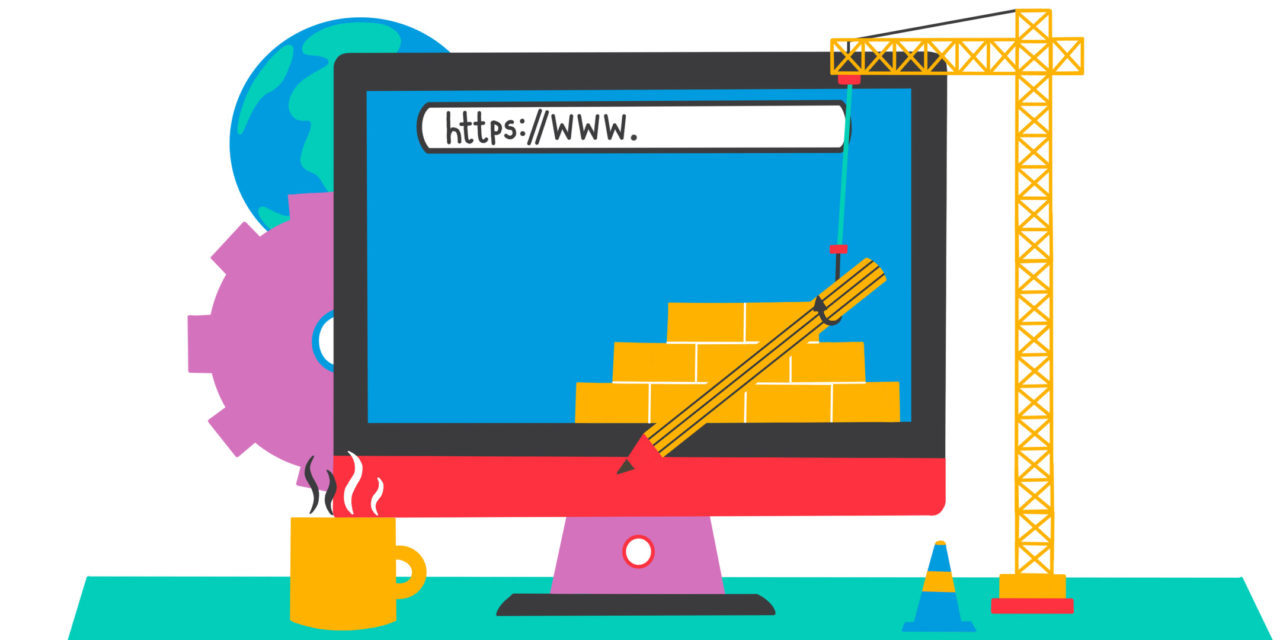
Building a Website
You read that correctly, phew – how to build a website. Things have changed and are changing faster than ever before, so I needed a title to catch your eye. Building a website.
Why bring this up at all? Well, please remember, this blog is targeted at our clients and not the general public; anyone can read it, but we want to focus on good advice and recommendations for our clients primarily. But building a website these days is tougher than ever. One needs vision and a clear idea of what the website might look like.
Content is King
One also needs content, and content comes in two forms these days: text and images. Text needs to be in snippet form or bite-sized, it needs to be clear, concise, accurate, meaningful, while at the same time being invocative, attention-grabbing, engaging and response-provoking.
That’s a tall order. We used to explain to clients that you need to tell people what to do on a website. Call Us!, Get in Touch! or Download Now are all common calls-to-action that have to be employed on a website these days. Nothing wishy-washy is allowed on a website any more. No elongated descriptions of beautiful places. It’s all ‘Bask in the Sun’ and ‘Enjoy the Pool’, short, sharp.
Then look at the photos. So many sins have been committed here; it is quite unbelievable, but most websites these days simply cannot display real photos taken from a business. Think of your office or shop or studio or wherever you work, there will be marks on the walls, mess, a table with scratches, something out of order. All this means, no chance on the website. Stock Photos (the biggest sinner) rules the waves, the idea that everything is picture-perfect in every way. However your staff look, the computer screens they are looking at, the view outside the window. Never before in human history have companies so comprehensively lied to their customers.
Organisations have sort of managed to get around this in two ways, firstly, if selling on an eCommerce website, then there are literally no photos of the warehouse or office or of any people, the less said the better, no names, no phone numbers and definitely no real photos. The second way is to use representative photos, so a picture of a green field full of cows, to represent the Laundrette business or some architectural buildings to represent a financial company. Financial companies are the worst for this sort of thing.
In short, when spending a few thousand on a website, that represents your multi-million pound business, why in heaven’s name scimp on the Photography? It would be more profitable to repaint the office and get a stylist in for the day.
Platform of Choice
Having considered the content for a moment, when building a website, now is the time to think about the platform. There is only one choice that needs to be made.
Will you be updating the website and if so how often? The reason for this question is to get people to think about eyeballs. Who should be looking at the website? Is it just brochureware or will you expect customers or clients to come to you via the website? These rules apply to all websites. Not just the confines of eCommerce websites.
Then you need to think of Google and these days AI. Why – because this is how you will be found. In the days gone by, people would search for your product or service offering, come across you and buy into you, most likely from Google. That’s all changing now. Today, we’re looking at AI. People will be researching, not just looking for your products or services. And you need to come up in AI.
As per ‘ever’, if you’re investing x thousands in your website, then what’s the point if only 100 people visit per month? You want/need thousands of visitors and thus, tragically, you need to feed the Google and AI beasts.
We’ve done some research here, look up any standard product on AI and you will most likely not see links for where to buy the product; instead, you’ll see ‘Top 10’ or ‘Rated’ or ‘New for 2025’ type answers. This poses a huge problem for clients with older products or services that fundamentally have not changed in dozens of years. If you’re not current, you’re not listed.
Pick your Platform, Shopify for eCommerce, WordPress for Blogging, Squarespace for Photography, WIX for self-managed and so on. Right tool – right job.
Getting Eyeballs
I’m doing it right now. I have a client, they want to invest in a new website, the numbers are big, the website is small, but tragically, the one number they have totally overlooked is how many users are looking at their website today. I can tell you, less than 100 per month.
The business case for a new website does not make sense. It’s like clients that ask us for SEO services and want us to double their traffic from 2 people per day to 4. We can do it. But it’s not economically and it does not make sense.
Sure, they need to solve an issue, namely that their current marketing is not working. But goals have to be drawn up and targets set, only then is it worth investing. I have another client spending £600 a month on Google Ads – with no mission in mind. What’s the point? Why spend the money?
I’ve also written previously about Google Analytics. How can it be that a website gets 1000 visitors, many of whom spend over two minutes on the website, visiting more than 5 pages and yet buy nothing, do nothing. If one had a shop and 1000 people didn’t just walk past, but actually came into the shop, you’d expect some of them to buy something.
There is a fundamental flaw in website Stats, don’t ask me where it is, but for some reason, zillions of people seem to be permanently roaming around the website, not interested in what they are seeing. Can it be true? Surely if you type in Electric Powered Bicycle and find https://www.motoglide.co.uk – they will buy something. Or at least make an enquiry.
Our rule when building a website is simple: The money spent on the website (i.e. the investment) now needs to be spent annually on marketing the website. If you have a budget of £1000 then you have a budget of £500 for the website and £500 for marketing it in year 1.
Conclusion
Content is King; this remains more true now than ever before. Get the wording right, and the Photos looking amazing and the website will be engaging to your audience and it will produce results. make is sickly yellow, plastered in stock photos and people will notice.
There is also an element of truth that far too many business owners take into account. It is worth spending a day with a Photographer having you’re employees’ photos taken and the office cleaned up. It can literally only be a positive move and it will motivate everyone involved. Practise what you preach.
The easy bit is choosing a half-decent Platform to build the website on. Web Design is going through an interesting phase these days, with pre-built designs available for very low rates. The main reason for this the content is literally more important. What has to be taken into account is the frequency of adding new content and AI is the current beast that needs to be fed.
Finally, marketing and getting people to the website. Usually completely overlooked, but if you cannot explain how you will get people to visit the new website that you are building – it won’t go anywhere. Our recommendation is always to allow budget for eyeballs.
As a last tip, when building a new website, that is completely new on a new domain name, then use Pay-per-Click – this will give you instant traction on the website, and you will be able to test if people are reacting to the website in the way you wan tthem to, are they filling in the enquiry form or buying the product. Google Ads is the best way to test a website. People type in what they want and they are taken to your website that provides exactly what they want. If they then don’t buy into your service or product, then you need to consider what you’re doing wrong.
Building a website is not that difficult these days, but what is difficult is the content and the pre-planning, as with holidays and booking flights, the more you plan in advance the better the deal at the end.